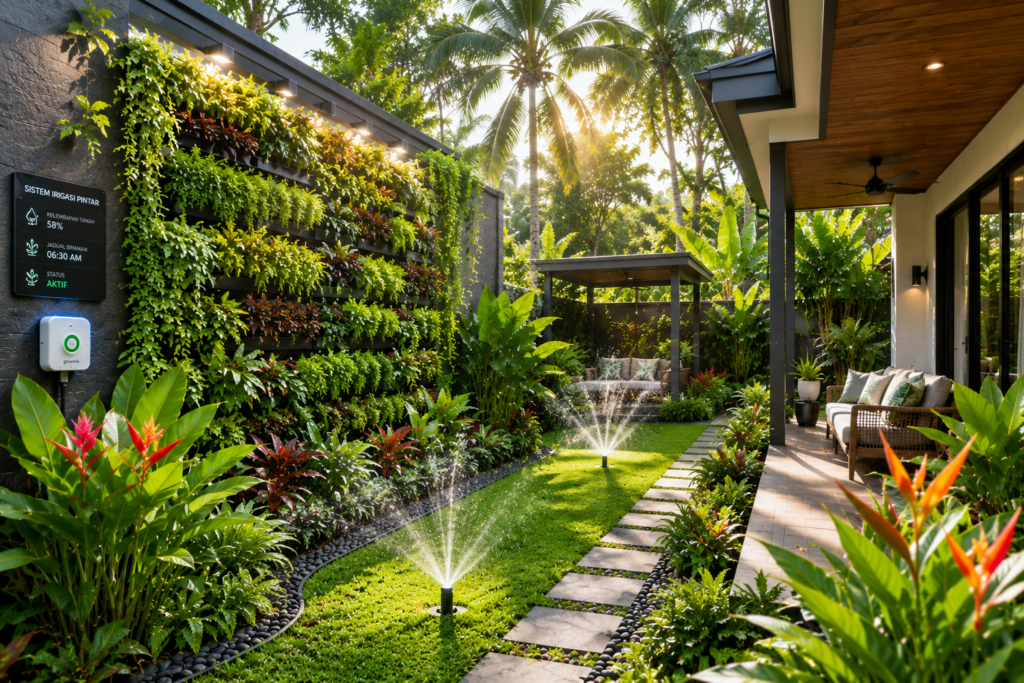
Malaysia’s residential landscaping industry has been gaining momentum. According to a 2025 market brief, the sector’s growth is fuelled by urban homeowners who want smart landscaping such as IoT‑enabled irrigation, sustainable materials and eco‑landscaping solutions. These homeowners are also driving demand for vertical gardens, rooftop landscaping and water‑efficient systems. Greater Kuala Lumpur leads adoption because of high urban affluence, while East Malaysia lags due to logistical constraints.
Sustainable landscaping is becoming a differentiator in Malaysian property markets. With 78.7 % of Malaysia’s population living in urban areas by 2024, developers and homeowners are turning to eco‑friendly features such as rain gardens, native vegetation and low‑impact irrigation systems. These practices align with national climate commitments and can reduce cooling energy demand by up to 3 °C through strategic tree placement. They also boost property value and speed up sales, especially in gated communities and luxury housing projects.
Environmental regulations and climate risks are reshaping the sector. Malaysia’s Department of Environment has tightened rules on pesticides, water‑runoff and land clearing. As flash floods and droughts become more frequent, regulators are incentivizing bioswales, permeable pavements and retention ponds. Firms that fail to adopt eco‑sensitive practices may be excluded from major residential projects.
Despite the opportunities, industry challenges persist. The market suffers from a shortage of certified horticulturists and evolving land‑use regulations. Local small‑to‑medium enterprises currently dominate, yet new entrants employing AI‑driven design platforms and automated maintenance tools are shaking up the sector. This creates investment opportunities for automation technologies and wellness‑focused outdoor spaces.
Pricing and value
Bomoh Pokok offers transparent pricing with landscaping services starting from RM 500. Their approach includes free inspections, licensed arborists and 24/7 emergency support, making professional landscaping more accessible.
How Malaysia Compares With Other Markets
The Malaysian landscaping market sits within a rapidly expanding global industry. Global market size: The worldwide landscaping and gardening services market is expected to grow from USD 118.5 billion in 2025 to USD 125.77 billion in 2026 and reach USD 169.36 billion by 2031 (a 6.13 % CAGR). Asia‑Pacific is the fastest growing region (7.28 % CAGR) because large infrastructure projects now include green space quotas. By type, maintenance services accounted for 41.08 % of the global market in 2025, while enhancement projects—like vertical gardens and smart installations—represent the fastest‑growing segment at an 8.32 % CAGR.
Regional comparison: A 2024 analysis finds that North America remained the largest market due to high consumer spending and commercial real‑estate investment, but Asia‑Pacific is projected to witness the highest CAGR thanks to rapid urbanization and rising disposable incomes. The Polaris report estimates the global landscaping services market at USD 328.76 billion in 2024 and USD 349.80 billion in 2025, with revenue expected to reach USD 616.55 billion by 2034 (6.5 % CAGR). In this report, the residential segment is forecast to grow the fastest because of the boom in single‑family home construction, and Asia‑Pacific will again see the highest CAGR.
United States: For context, the U.S. landscaping industry reached a market size of USD 184.1 billion in 2025, growing at a 6 % CAGR between 2020 and 2025. There were approximately 726,565 landscaping businesses and 1.5 million employees. Even though most companies are small and rely on local reputation and personalized service, major players like BrightView—worth around USD 3 billion in revenue—use fleet standardization and acquisitions to gain scale. U.S. trends mirror Malaysia’s emphasis on sustainability: smart irrigation systems projected to reach USD 5.8 billion by 2033 and saving about 15 000 gallons of water per household annually, along with xeriscaping and native plantings.
These comparisons show that Malaysia’s focus on smart and sustainable landscaping aligns with global movements. The country can leverage lessons from mature markets—such as adopting AI‑enabled maintenance tools and offering subscription contracts—to accelerate growth while preserving its unique tropical ecology.
Why Choose Bomoh Pokok for Your Landscaping Project?
Bomoh Pokok is a family‑run tree and landscaping specialist based in Kuala Lumpur. Key advantages include:
- Licensed & insured arborists: The company employs certified professionals to ensure safety and regulatory compliance.
- Full‑service design, installation and maintenance: Bomoh Pokok provides consultation, detailed proposals with plant lists and cost estimates, professional installation and optional ongoing maintenance. This one‑stop service ensures consistent quality.
- Eco‑friendly approach: They use native plants, water‑efficient irrigation and organic fertilisers. These practices align with sustainable trends highlighted above.
- Modern equipment & safety: The team uses cranes, rigging systems and state‑of‑the‑art tools to deliver efficient, damage‑free services.
- Transparent pricing & flexible scheduling: Free quotes, no hidden fees and options tailored to different budgets and maintenance cycles.
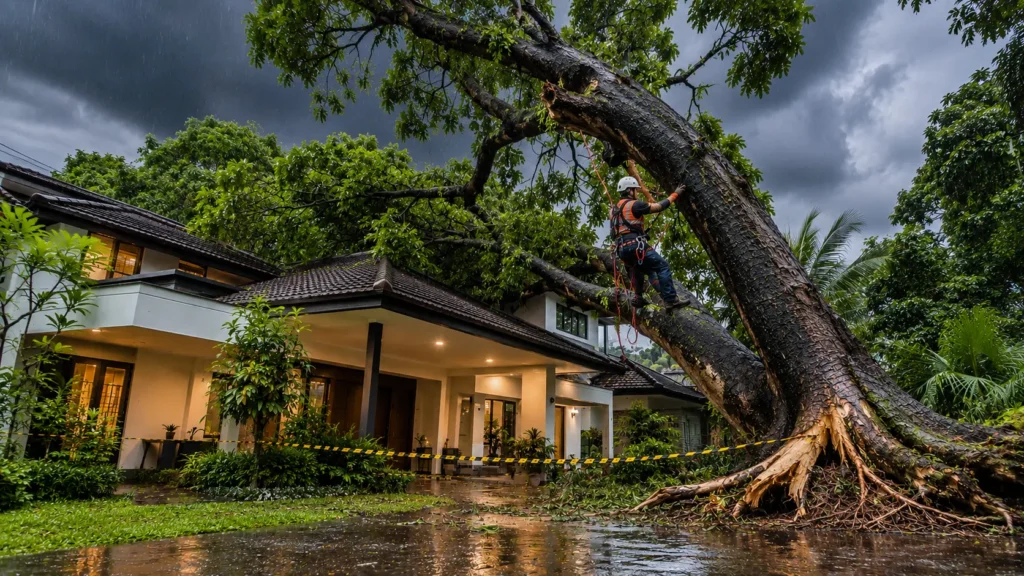
- Integrated tree care: Beyond landscaping, Bomoh Pokok offers tree cutting, trimming, stump grinding and emergency services, allowing clients to manage all outdoor needs through one trusted provider.
Tips for Planning Your 2026 Landscape
The following ideas can help homeowners and businesses in Malaysia create landscapes that are beautiful, sustainable and future‑proof:
- Vertical gardens and rooftop landscaping: These solutions maximize limited urban space and are among the fastest‑growing segments of Malaysia’s market. Rooftop gardens also insulate buildings, reducing energy costs.
- Native plants and rain gardens: Indigenous vegetation requires less water, fertiliser and pesticides and supports local biodiversity. Rain gardens capture stormwater and reduce runoff, aligning with new Malaysian regulations.
- Smart irrigation and AI tools: Invest in IoT‑enabled irrigation controllers that adjust watering schedules based on weather data. The U.S. market shows these systems can save significant water and costs. AI‑assisted maintenance platforms are already emerging in Malaysia.
- Xeriscaping and drought‑resistant design: Create low‑water landscapes using drought‑tolerant species and permeable hardscapes. This reduces maintenance and meets stricter water‑use regulations.
- Edible and wellness gardens: Incorporate herbs, fruit trees and vegetable beds along with meditation zones or shaded seating. Homeowners in other markets value edible plantings and wellness‑focused outdoor spaces.
Conclusion
Malaysia’s landscaping market is evolving rapidly. Urban homeowners and businesses are embracing smart, sustainable and space‑efficient designs like vertical gardens and rooftop landscapes. Government regulations and climate challenges are pushing the industry toward eco‑friendly solutions. On a global scale, landscaping services are experiencing steady growth with Asia‑Pacific leading in future demand. By investing in smart irrigation, native planting and AI‑enabled maintenance, Malaysian property owners can stay ahead of these trends and enhance property value.
Bomoh Pokok’s combination of licensed arborists, eco‑friendly practices and end‑to‑end landscaping services positions it uniquely to meet this demand. Whether you’re renovating a family home or planning a commercial project, partnering with a trusted local expert can turn your outdoor vision into a thriving, sustainable reality.
For personalised advice or a free consultation, contact Bomoh Pokok today.